Member Login - Account - Logout

Science and Technology Australia
  • Home
  • About STA
    • About Us
    • Executive and governance
    • Reconciliation Action Plan
    • Policy Vision
    • Policy Wins
    • Work for us
  • News and Publications
    • Latest news
    • Submissions, reports and publications
    • 2025 STA Federal Election Priorities
  • Our Programs
    • Science Meets Parliament 2026
    • Superstars of STEM
    • Super STEM workshops
    • STEM Ambassadors
    • Parliamentary Friends of Science
    • Science Policy Fellows Alumni
  • STA Membership
    • STA Membership
    • Our Members
    • Member How-to Guides
    • Login to member portal
    • Register for member portal
  • Contact
  • Home
  • About STA
    • About Us
    • Executive and governance
    • Reconciliation Action Plan
    • Policy Vision
    • Policy Wins
    • Work for us
  • News and Publications
    • Latest news
    • Submissions, reports and publications
    • 2025 STA Federal Election Priorities
  • Our Programs
    • Science Meets Parliament 2026
    • Superstars of STEM
    • Super STEM workshops
    • STEM Ambassadors
    • Parliamentary Friends of Science
    • Science Policy Fellows Alumni
  • STA Membership
    • STA Membership
    • Our Members
    • Member How-to Guides
    • Login to member portal
    • Register for member portal
  • Contact
2 April 2019

Back in the black, but vision for science veers off track

2019-20 Budget

The national peak body for scientists has warned that the 2019/2020 Budget has missed the opportunity to invest in solution-making scientific and technological research and Australia’s world-class institutions and agencies that make it possible.

President of Science & Technology Australia, Professor Emma Johnston AO, said the Federal Budget was a mixed result for Australia’s science and technology driven future.

“While funding for CSIRO appears to have decreased, this reflects a decline in CSIRO expenditure rather than a cut in government funding. Government investment in the agency has kept pace with inflation, in line with STA’s pre-budget recommendations,” Professor Johnston said.

“Reductions to the Research Support Program, however, compound the cuts this program suffered in December – severely limiting our universities’ ability to conduct world-leading research and drive innovation.

“Research at tertiary institutions is also severely hampered by the reallocation of $3.9 billion from the Education Investment Fund (EIF) to a new Emergency Response Fund. While it is important to support those affected by emergencies including floods and fires, stripping funds from education to support emergency responses is a false economy.

“STEM education increases our national capacity to predict, prevent and respond to the impacts of national emergencies.”

Professor Johnston said some allocations in the Budget would aid Australia’s capacity to build a strong future based on science and technology – including a welcome focus on women in STEM.

“It is good to see the Australian Research Council and the National Health and Medical Research Council have been supported to meet the costs of inflation this year, something STA has called for over many years,” she said.

“Bold investments in medical research and development through the Medical Research Future Fund will empower Australian scientists and technologists to become world leaders in their field.

“What we did not see in this budget was an ambition to be the clever country in all fields.

“A complementary Fund to support the translation and commercialisation of knowledge built through non-medical science research programs would amplify the economic returns that STEM brings for Australia.”

Professor Johnston said other positive steps were commitments to further investment to build space infrastructure, a boost to Questacon’s science education and outreach programs, and support to encourage and retain women in STEM.

STA will produce a more detailed budget analysis in the coming days.


Media enquiries: media@sta.org.au | 02 6257 2891

Share
science technology
Previous StoryAustralia continues to lead in STEM gender equity
Next Story2019/20 Federal Budget Analysis

Related Articles

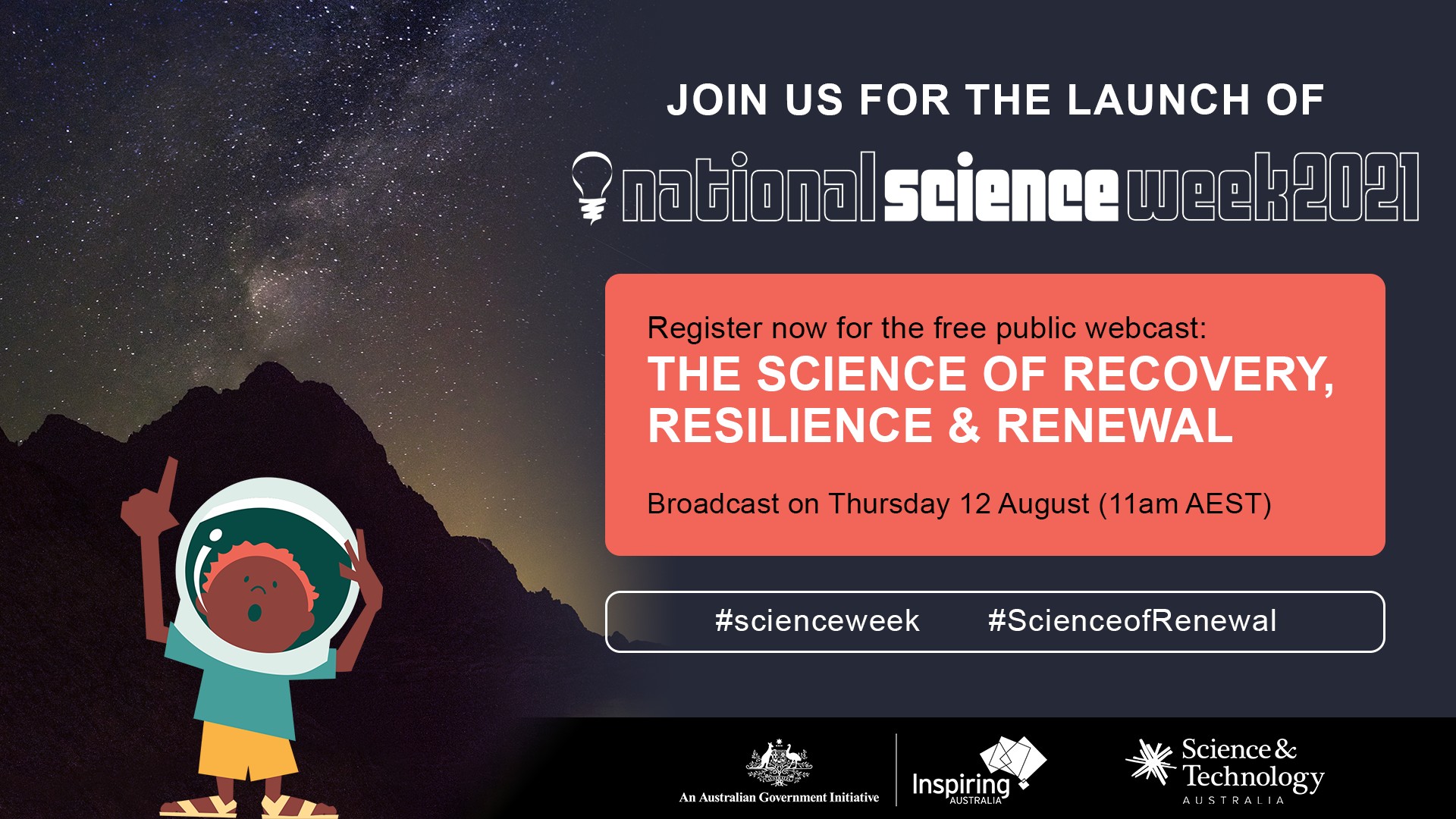
  • Join us for the launch of National Science Week 2021
    Australians back science and scientists to lead recovery
  • artificial-intelligence-3382507_1920
    2021/22 Federal Budget Breakdown

ABOUT US

Science & Technology Australia (STA) is Australia’s peak body in science and technology. We represent more than 235,000 scientists, engineers and technologists. STA is an influential voice for evidence and expertise in public policy.

Recent news

  • R&D review missing the mark
  • STA 2025 Annual General Meeting and Board Nominations
  • Science sector welcomes Horizon Europe discussions

Our members

  • All Members
  • Agricultural and Food Sciences
  • Aquatic Sciences
  • Biological Sciences
  • Chemical Sciences
  • General Science and Technology
  • Geographical and Geological Sciences
  • Mathematical Sciences
  • Medical and Cognitive Sciences
  • Physical Sciences
  • Plant and Ecological Sciences
  • Technological Sciences

Search for news

Most popular

  • Launch of Parliamentary Friends of Engineering
  • Science sector welcomes Horizon Europe discussions
  • R&D review missing the mark
  • STA 2025 Annual General Meeting and Board Nominations
  • STA turns 40: four decades of science, policy, and progress

Sign up to our newsletter

Science and Technology Australia Limited (STA) (ACN 664 679 056 and ABN 71 626 822 845) is a company limited by guarantee. STA was formerly known as Federation of Australian Scientific and Technological Societies Inc and was authorised under section 82 of the Associations Incorporation Act 1991 (ACT) to transfer its registration under the Corporations Act 2001 (Cth) to its new company structure on 3 January 2023.

STA PRIVACY POLICY

OTHER STA POLICIES

ACNC Registered Charity Logo

Copyright © 2024 Science & Technology Australia. All Rights Reserved